

· AFX Research, LLC
What a Records Search Needs From You Before It Can Start
The three inputs that decide what a search can find, from how the parcel is identified to which names go into the index and how far back the period runs.
Table of Contents
A search is a narrow instrument pointed at a filing office, and what it returns is set almost entirely by three things you supply before anyone opens a book. Get them right and the report answers the question you had. Get them approximately right and the report is still accurate, but about something slightly different. Our note on which title search you need covers picking the search. This one covers what to hand over once you have.
How the parcel is identified
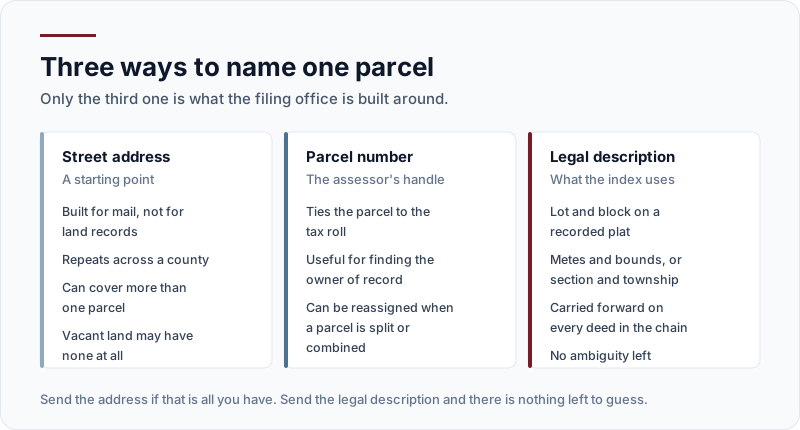
A street address is a starting point, not an identifier. It was assigned for mail delivery, it can repeat across a county, it can cover several parcels, and rural ground frequently has none. We can almost always work from one, and the first thing we do with it is turn it into something the record actually uses.
A parcel or tax identification number is better. It ties the property to the assessment roll, which is usually the fastest route to the current owner of record. It is not permanent, though, because numbers get reassigned when parcels are split or combined.
The legal description is the real identifier, because it is what the recorder indexes and what every deed in the chain carries forward. If you have a deed, a title commitment, or a tax bill with the description on it, send that. It removes the entire category of error where careful work is done on the wrong piece of ground.
Which names go into the index
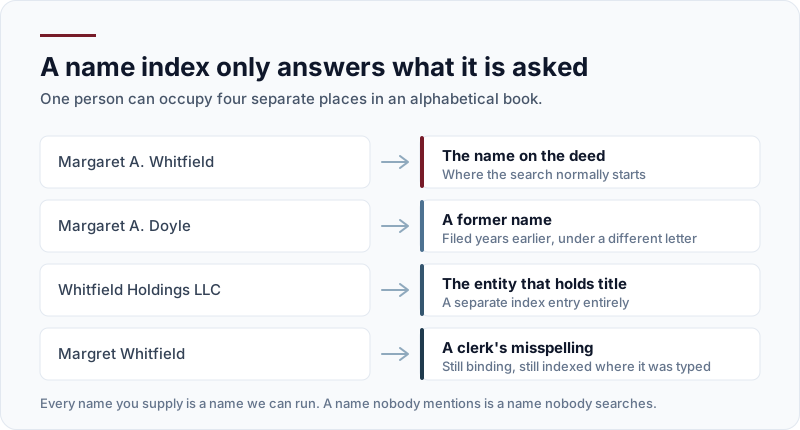
This is the input people underestimate. Land records are indexed by party name, in alphabetical books, and a great deal of what matters to a buyer or a lender is filed against a person rather than against the land. Judgments, tax liens, and bankruptcies all work that way.
So the search covers the names it is given, and one owner can occupy several places in the index at once. A former or maiden name from an earlier transaction. An entity that holds title while a person signs for it. A trade name used on one filing and not another. A misspelling introduced by whoever typed the document, which is still binding and still filed exactly where it was typed.
None of that is exotic. It is the ordinary condition of a name index, and it is the reason researchers who work the same counties year after year ask for more names than you expect. An incomplete name list produces a clean report on an encumbered property. If you know of a prior name, a related entity, or an alternate spelling, it costs nothing to include and it is frequently the difference between the two outcomes.
How far back the period runs
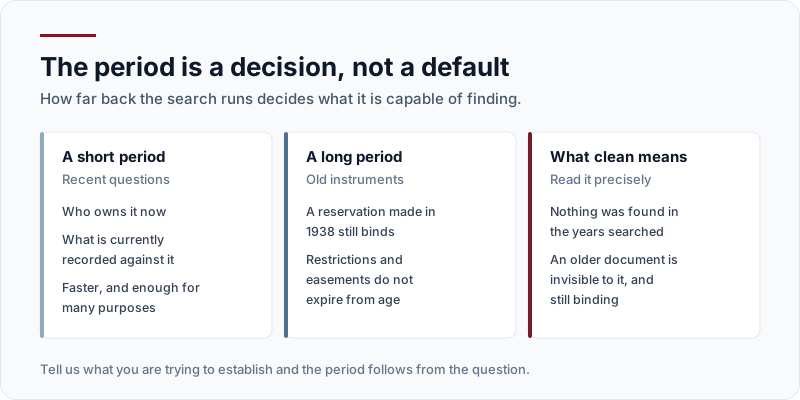
Every search covers a defined period, and that choice is not a formality. A short period answers a present-tense question well, meaning who owns this now and what is recorded against it now. A longer period is what reaches instruments that are old and still operative, because a reservation, a restriction, or an easement does not expire from age.
The consequence is worth stating precisely. A report that comes back clean means nothing was found in the years searched. A document recorded before the period began is invisible to that search and continues to bind the property regardless. If the age of the parcel or the nature of your question makes an old instrument plausible, say so when you order, and the period will be set to reach it.
Say what you are trying to establish
The single most useful thing you can send is not a document at all. It is a sentence describing what you need to be able to conclude. Scoping runs backward from that sentence, deciding the search, the names, and the period together, and it is the part of the work that happens before any record is read. Our services page sets out the kinds of work that sentence can point to.
The takeaway
Send the best identifier you have, every name you know of, and a plain statement of what you are trying to establish. Those three inputs do more to determine the usefulness of a report than anything that happens afterward. Find the property that runs your search, or tell us what you are trying to establish and we will point you at the right one before anything is ordered.