

· AFX Research, LLC
How Far Back a Property Search Should Go, and Who Decides
The term searched is the single setting that most changes what a report can find. What the common terms cover, what sets them, and where a longer search stops paying for itself.
Every property search has a term, meaning a number of years it reaches back, and that setting decides more about the answer than almost anything else. Two searches on the same parcel, run by the same abstractor in the same week, can return different findings purely because one reached back thirty years and the other reached back three. This is the practical half of what a search needs from you, and it is worth settling before the work starts rather than after.
Three common terms
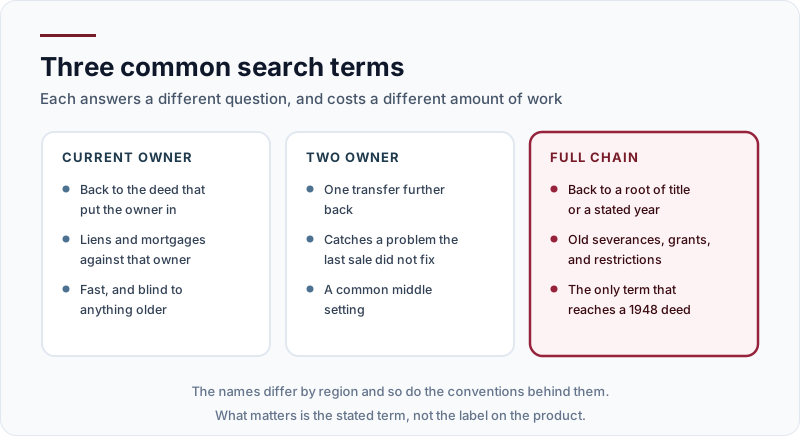
A current owner search reaches back to the deed that put the present owner in, and covers liens and mortgages recorded against that owner. It is quick, and it is completely blind to anything older.
A two owner search goes one transfer further. That extra step catches a surprising number of problems, because a defect that the last sale failed to clear is often sitting just on the other side of the boundary a current owner search draws.
A full chain search runs back to a root of title or to a stated year. This is the only term that reaches an old severance, a mid century restriction, or an easement granted before the house existed. Names for these vary by region, which is why the stated term matters more than the product label, and why the services page describes searches by what they cover rather than by name alone.
What sets the term
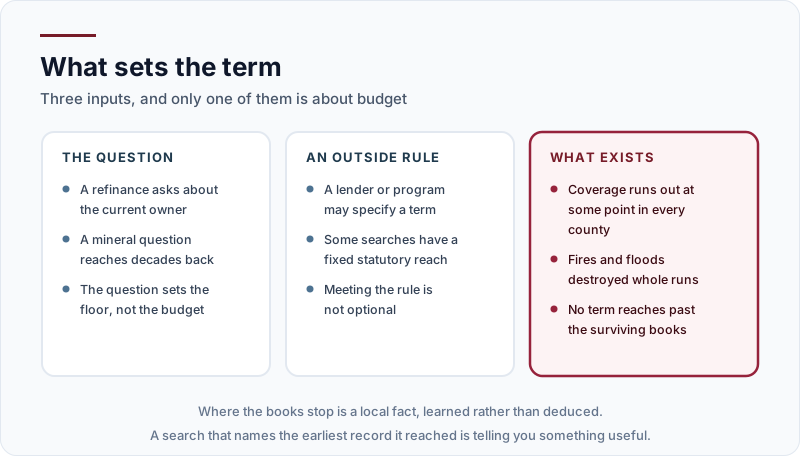
The first input is the question. A refinance is asking about the current owner and the liens against them, so a short term genuinely answers it. A question about whether minerals were ever severed, or whether an old covenant still burdens the lot, cannot be answered by a search that never reaches the instrument in question.
The second is any outside requirement. A lender, a program, or a state rule may specify a term, and where one applies it sets a floor regardless of what anyone would otherwise choose.
It is worth separating that from budget, because the two get conflated constantly. A longer term costs more, so the term is often chosen as a price decision. That works fine when the question is genuinely a short one, and it fails badly when it is not, because a search that cannot reach the instrument in question does not return a smaller answer. It returns nothing, and nothing reads exactly like good news.
The third is what actually survives. Coverage runs out somewhere in every county, sometimes at a courthouse fire, sometimes at the year the office opened. No term reaches past the surviving books, and a report that names the earliest record it reached is telling you something useful about the limit rather than hiding it.
Where a longer search stops paying
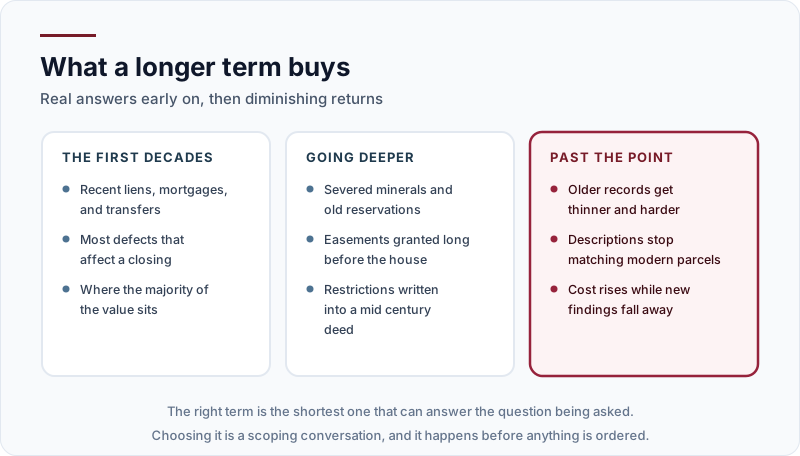
The first stretch is where most of the value sits. Recent liens, mortgages, and transfers, and the great majority of defects that will actually affect a closing, are all within a few decades of today.
Going deeper buys a specific and narrower category. Severed mineral estates, easements granted to a utility or a neighbor generations ago, and restrictions written into a deed in 1952 only appear if the search reaches them. When your question is one of those, no shorter term will do.
Past that, returns fall away. Older volumes are thinner, descriptions stop matching modern parcels, and the work gets slower while the findings get sparser. So the right term is not the longest available one. It is the shortest one that can actually answer the question you brought, which is a judgement made in conversation rather than by picking the largest number on a menu.
The takeaway
The term is a scoping decision, and it belongs at the start. Say what you are trying to establish, note any requirement someone else has imposed, and accept that the county’s surviving records set a ceiling nobody can raise. Then read the report’s scope line as carefully as its findings, because the two only mean something together. Find the property that runs your search, or tell us what you are trying to establish and we will point you at the right one, and the right term, before anything is ordered.