

· AFX Research, LLC
What a Title Search Is Not, and Why the Difference Matters
A search is not title insurance, not a legal opinion, and not a survey. What it actually produces, and how to read a report that comes back with nothing found.
Table of Contents
People arrive at a title search expecting one of three other things, and the mismatch is usually only discovered at an inconvenient moment. Someone assumes they are protected because a search was clean. Someone treats a report as a ruling on ownership. Someone expects it to say where the property line runs. None of those is what the document does, and understanding the boundary is most of what makes the report useful. It follows on from which title search you need, which is about picking the right one; this is about what any of them can deliver.
Three things it gets mistaken for
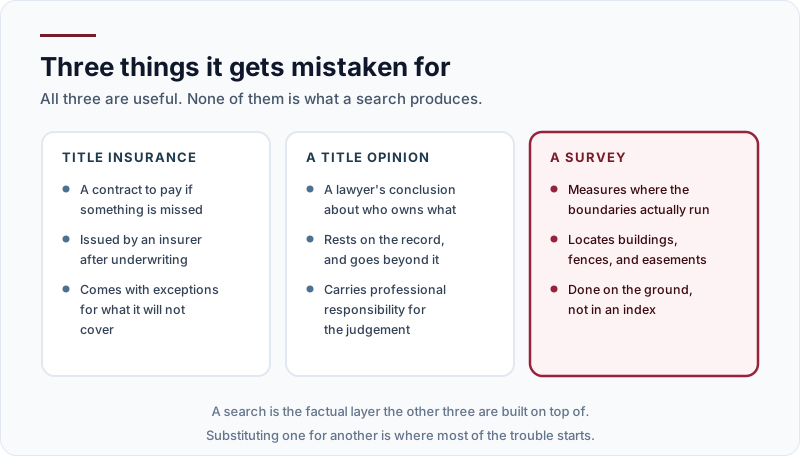
Title insurance is a contract. An insurer agrees to pay if certain problems surface later, having done its own underwriting and having written a list of exceptions for the things it will not cover. A search does no underwriting and promises no payment.
A title opinion is a lawyer’s conclusion about the state of the title, resting on the record but going beyond it, and carrying professional responsibility for the judgement made. An abstractor reports what the record contains. Turning that into a conclusion about ownership is the lawyer’s work, and in several contexts, mineral title being the clearest, it is the only thing that answers the question.
A survey measures the ground. Where the boundaries run, where the buildings sit, whether a fence encroaches. A search reads an index and never leaves the office, so it can tell you a twenty foot easement was granted in 1971 and it cannot tell you where those twenty feet are.
What it actually produces
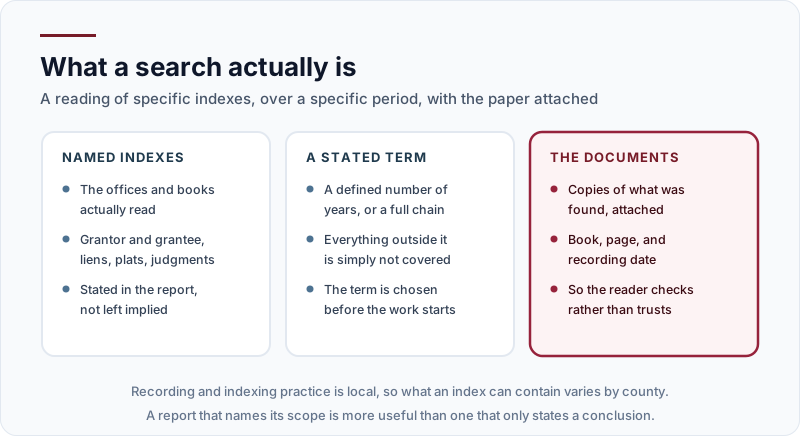
A search is a reading of named indexes, over a stated term, with the documents attached. That sentence is short but every part of it is doing work.
Named indexes, because recording practice is local and which books hold what is a county-level fact, as we covered in why recording practice is local. A stated term, because everything outside it was not looked at and the report should say so plainly. The documents attached, because a reader who can check the instrument does not have to trust a paraphrase of it.
A report that gives you those three things is a piece of evidence you can build on. A report that gives you a conclusion without them is asking for trust it has not earned.
None of this makes a search a lesser document. It makes it a specific one. Insurance, opinions, and surveys all depend on somebody first having read the record properly, and the quality of that reading sets the ceiling on everything built above it. Thirty years of doing it has mostly been thirty years of arguing for that point.
Reading a report that found nothing
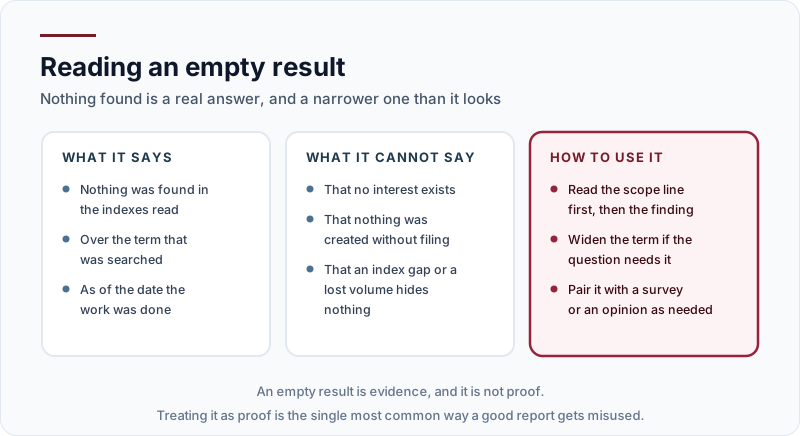
This is where the distinction stops being academic. An empty result says nothing was found in the indexes read, over the term searched, as of the day the work was done. It does not say no interest exists.
Plenty of real interests never reach a recorder. Rights created by long use, interests that passed at death with nothing filed locally, agreements the parties never recorded. Add the occasional index gap or lost volume and you have a set of things a search structurally cannot return. So a clean report is strong evidence and it is not proof, and the difference is worth holding onto.
The practical habit is to read the scope line before the finding. If the term is too short for the question, widen it. If the question is about location, add a survey. If it is about who owns what, add an opinion.
The takeaway
A search is the factual layer the other documents are built on, and it is most valuable when nobody is asking it to be something else. Read the scope, read the finding, and add whichever of the other three the situation actually calls for. Our services page sets out the kinds of search available and the network shows which property runs each one. Or tell us what you are trying to establish and we will point you at the right one before anything is ordered.