

· AFX Research, LLC
Why Recording Practice Is Local, and Why It Changes Answers
Land records are kept county by county, and the differences are not cosmetic. Which office holds them, how names are indexed, how far they run back, and what is never recorded.
Table of Contents
There is no national land record. There is no state land record either, in most of the country. There are a few thousand county-level filing offices, each operating under its own state’s law and its own accumulated habits, and a property search is always a search of one of them. That single structural fact explains most of what surprises people about title research, including why two searches on adjacent parcels can be very different pieces of work. Our note on what a search needs from you covers the inputs; this is about the system receiving them.
Three counties, three different jobs
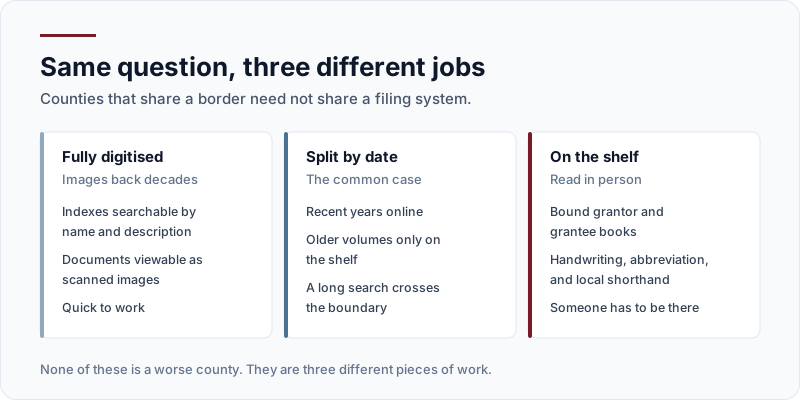
One county has scanned images and searchable indexes running back decades, and the work can largely be done from a screen. The county next to it has the last twenty years online and everything older in bound volumes on a shelf, so any search reaching further back crosses that boundary partway through. A third has the books and nothing else, and somebody has to physically be there.
None of these is a deficient county. They are three different jobs with three different costs and timelines, and a search that quotes one turnaround for all of them is quietly wrong about at least two.
Four things that are set locally
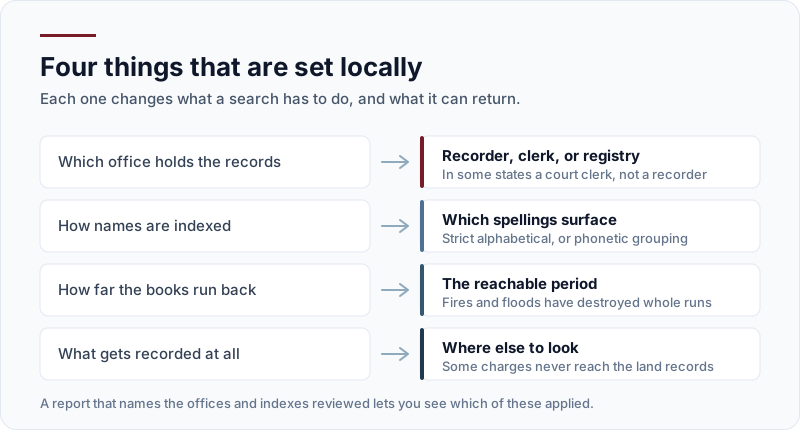
Which office holds the records. Usually a county recorder or register of deeds. In some states it is a court clerk, and someone looking for a recorder’s office there will not find one.
How names are indexed. Alphabetical is not one method. Some indexes group names phonetically or by a soundex-style rule, some are strictly literal, and the difference decides whether a variant spelling surfaces or sits invisible a page away.
How far the books run back. Coverage is uneven, and it is occasionally absent, because courthouse fires and floods have destroyed whole runs of volumes, and what was reconstructed afterward varies enormously.
What gets recorded at all. Some obligations that behave like liens never reach the land records, sitting instead on a municipal billing system or in an agency file. A search of the recorder cannot return them because they are not there.
What familiarity with a county actually contributes
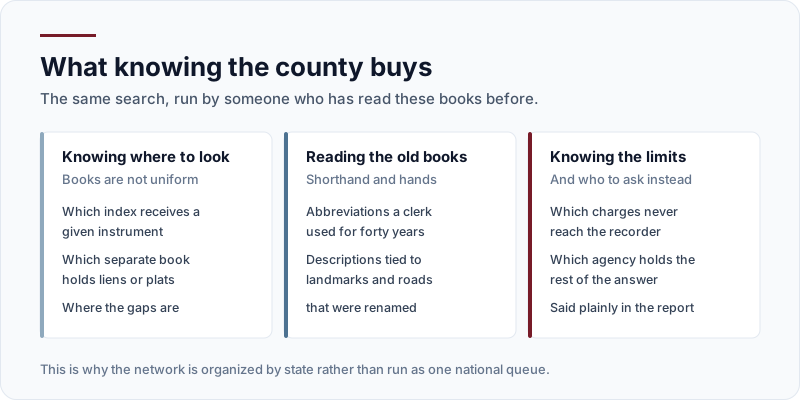
Knowing where to look is the first part. Which index receives a particular instrument, which separate book holds liens or plats, and where the coverage gaps sit are all local facts, learned rather than deduced.
Reading the old books is the second. A clerk who worked one county for forty years developed abbreviations, and descriptions in older volumes are frequently tied to landmarks, watercourses, and roads that have since been renamed or removed.
Knowing the limits is the third, and it is the one that protects the client. A researcher who works a county regularly knows which questions its records cannot answer and can say so plainly, which is worth more than a confident report that quietly leaves out a category. It is the reason AFX has kept the same abstractors on the same counties since 1995, and the reason the network is organized by state rather than run as one national queue.
What this means for reading a report
Two habits follow. First, treat the report as a description of specific offices and indexes over a specific period, and expect it to say which ones. Second, read an empty result as what it is, which is nothing found in what was searched. Local practice determines what “what was searched” could contain, which is why a report that names its scope is more useful than one that simply concludes.
It is also why the same question, asked of two counties, can deserve two different searches. Matching the work to the place is part of the work, and our services page describes the kinds of search that get matched.
The takeaway
The record is local, so the search is local, and the honest version of any report says which office it read and over what period. That is the difference between a document you can rely on and one you can only hope about. Find the property that runs your search, or tell us what you are trying to establish and we will point you at the right one before anything is ordered.