

· AFX Research, LLC
Who Orders a Title Search, and What Each of Them Actually Needs
The same county records get read for very different questions. Who asks, what usually triggers the request, and why the work is organized by place rather than by queue.
Table of Contents
A title search looks like one product and behaves like several. The abstractor reads the same indexes in the same county whoever is asking, and what makes a report useful is whether it answers the question the person actually brought. Those questions differ enormously, and the differences are more useful to understand than the similarities. It is the practical companion to which title search you need.
Three kinds of requester
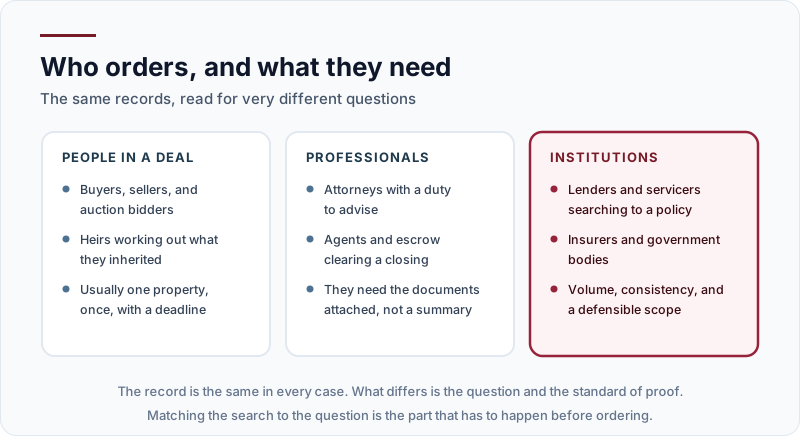
People in a deal. Buyers, sellers, auction bidders, and heirs working out what they have inherited. Usually one property, once, with a date attached. What they need most is a plain answer and a clear statement of what was not covered.
Professionals with a duty. Attorneys advising a client, agents and escrow officers clearing a closing. They need the recorded instruments attached rather than described, because they will be relying on the wording and may have to show their work later.
Institutions searching to a policy. Lenders, servicers, insurers, and government bodies searching many properties against an internal standard rather than a single transaction. Consistency and a defensible, stated scope matter to them more than any individual finding.
What actually prompts the request
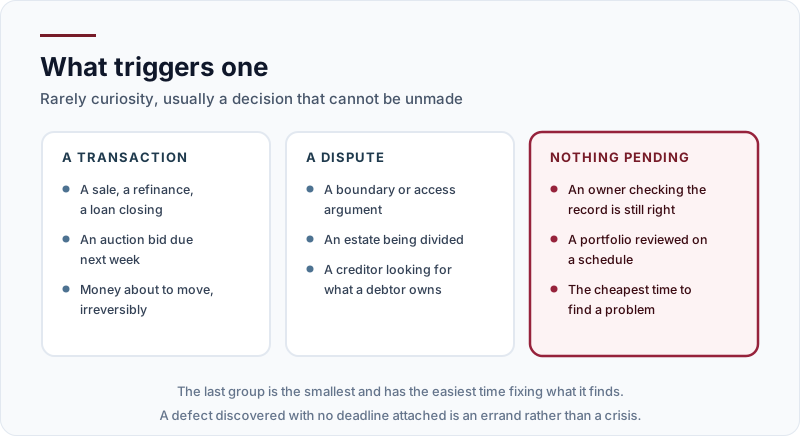
Almost nobody orders one out of curiosity. The common trigger is a transaction, which is to say money about to move in a way that cannot easily be undone. A sale, a refinance, a loan closing, an auction bid due next week.
The second trigger is a dispute. A boundary or access argument, an estate being divided, a creditor trying to establish what a debtor actually owns.
Both of those share a shape worth noticing. The search is being asked to settle something between parties who disagree, or who are about to be bound by a document. That is why the attached instruments matter so much more than the summary, and why a report that names its scope is more useful than one that simply concludes.
The third group is the smallest and has the best time of it. An owner checking that the record still says what they think it says, or an institution reviewing a portfolio on a schedule with nothing pending. A defect found with no deadline attached is an errand. The same defect found four days before closing is a crisis, and it is the identical defect.
Why the work is organized by place
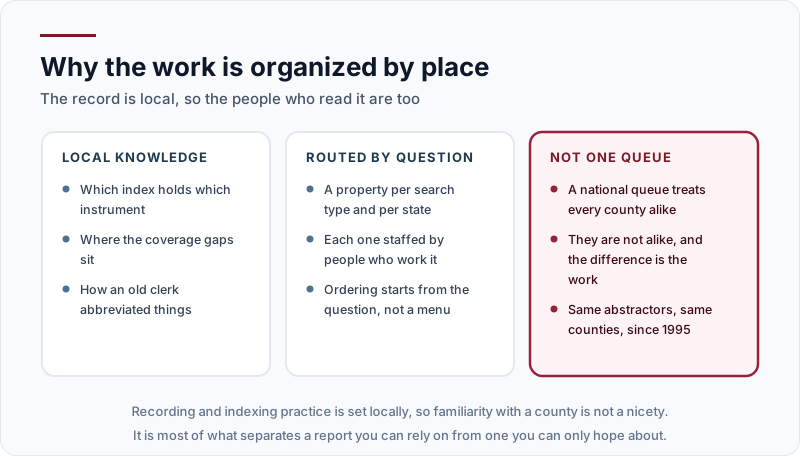
Because the record is local, the people who read it have to be. Which index holds a particular instrument, where the coverage gaps sit, and how a clerk who worked one county for forty years abbreviated things are all learned facts rather than deduced ones. None of them can be worked out from first principles by somebody competent who has never opened that county’s books, and there is no manual that collects them.
So the work is routed by question and by place, with a property for each kind of search in each state, staffed by people who work those counties regularly. That is why ordering starts from what you are trying to establish rather than from a menu, and why the services page describes searches by what they cover.
A single national queue would treat every county as interchangeable. They are not interchangeable, and the difference between them is most of the actual work. Keeping the same abstractors on the same counties since 1995 is the whole reason a report can say plainly which questions the local records cannot answer, which is covered further in what we need from you and on our about page.
The takeaway
The record is the same for everyone and the question never is, so say what you are trying to establish before choosing a search. If nothing is pending, that is the cheapest possible moment to look. Find the property that runs your search, or tell us what you are trying to establish and we will point you at the right one before anything is ordered.