

· AFX Research, LLC
Name Searches and Parcel Searches, and Why You Need Both
One asks what is attached to a piece of land, the other asks what is recorded against a person. Each misses what the other catches, and neither reaches an unrecorded interest.
Table of Contents
There are two ways to interrogate a county land record, and people frequently order one while describing the other. A parcel search asks what is attached to a piece of land. A name search asks what is recorded against a person or an entity. They return overlapping but genuinely different answers, and most real questions need both. It is the mechanical companion to which title search you need.
Two questions, two indexes
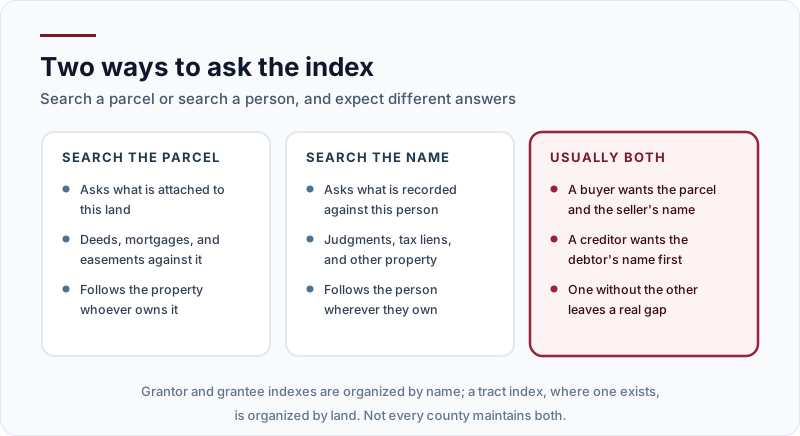
Search the parcel and you get what follows the land. The deeds in its chain, mortgages against it, easements and covenants burdening it, and any lien recorded against the property itself. It stays with the property whoever happens to own it.
Search the name and you get what follows the person. Judgments, tax liens, and other property they own in that county, which may include parcels nobody mentioned.
Which is why most files run both. A buyer wants the parcel searched and the seller’s name run, because a judgment docketed against the seller last week may not yet show against this land. A creditor starts from the debtor’s name, because finding the property is the whole exercise. One without the other leaves a specific and predictable gap.
Worth knowing that not every county is organized the same way. Grantor and grantee indexes, arranged by name, are close to universal. A tract index, arranged by land, is not, and where none exists the parcel question has to be answered by working through names.
That structural fact explains something clients often find puzzling, which is why a parcel search in one county is quick and the same request two counties over is not. Where a tract index exists, the land can be interrogated directly. Where it does not, establishing what is attached to a parcel means reconstructing it from the name side, one owner at a time back through the chain.
Names are the hard part
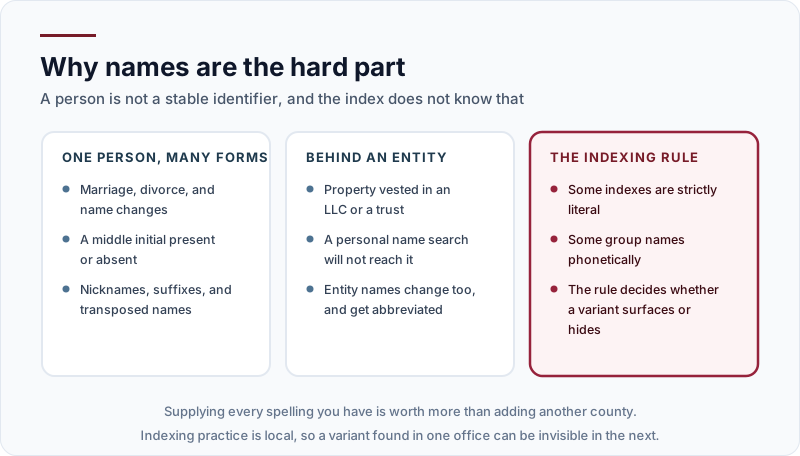
A person is not a stable identifier. Marriage, divorce, and legal name changes all generate variants, and so does something as small as a middle initial appearing on one filing and not the next. Nicknames, suffixes, and transposed first and last names are ordinary.
Entities hide ownership from a personal name search entirely. Property vested in an LLC or a trust does not appear under an individual’s name at all, and entity names get abbreviated inconsistently on filings.
Then the indexing rule decides what happens to a variant. Some indexes are strictly literal, some group names phonetically, and that local choice determines whether a spelling surfaces or sits invisible a page away. It is one more instance of why recording practice is local, and it is the reason supplying every spelling you have is worth more than adding another county.
What neither one reaches
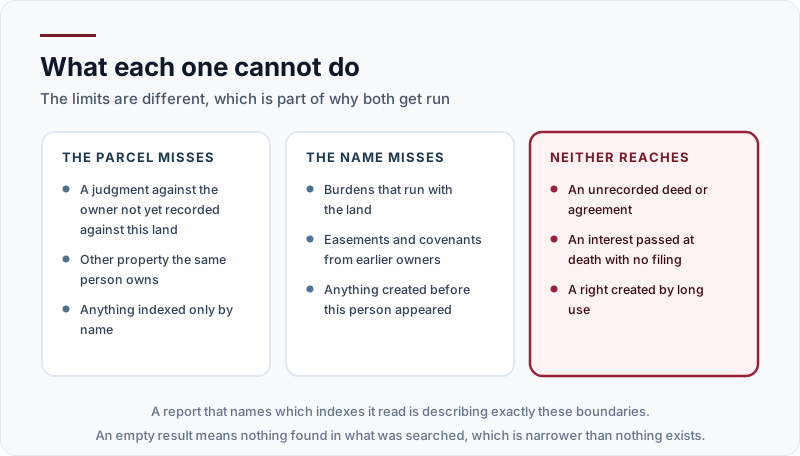
A parcel search misses anything indexed only by name, including other property the same owner holds. A name search misses burdens that run with the land from earlier owners, which is most easements and covenants.
Neither gap is a defect in the method. They are the direct consequence of how the two indexes are built, and knowing which one you asked is what lets you read the answer correctly.
And neither reaches what was never recorded. An unrecorded deed or agreement, an interest that passed at death with nothing filed locally, or a right created by long use are all outside both indexes, as covered in what the recorder does not hold. That is why a report worth relying on names the indexes it actually read, and why an empty result means nothing was found in what was searched rather than that nothing exists.
The takeaway
Decide whether your question is about a piece of land or about a person, then run both anyway, because each catches what the other structurally cannot. Give every name variant you have, name any entity involved, and read the scope line before the finding. Find the property that runs your search, or tell us what you are trying to establish and we will point you at the right one before anything is ordered.