

· AFX Research, LLC
Which Property Professional Answers Which Question, Exactly
What an abstractor, a surveyor, an attorney and a title insurer each actually do, the questions that reliably arrive at the wrong desk, and the order to engage them in.
Table of Contents
Almost every complaint about a property report turns out to be a routing problem. The report answered the question it was asked, and the person reading it wanted a different question answered. Four professionals work on the same property from four directions, their work overlaps just enough to be confusing, and none of them can do another’s job.
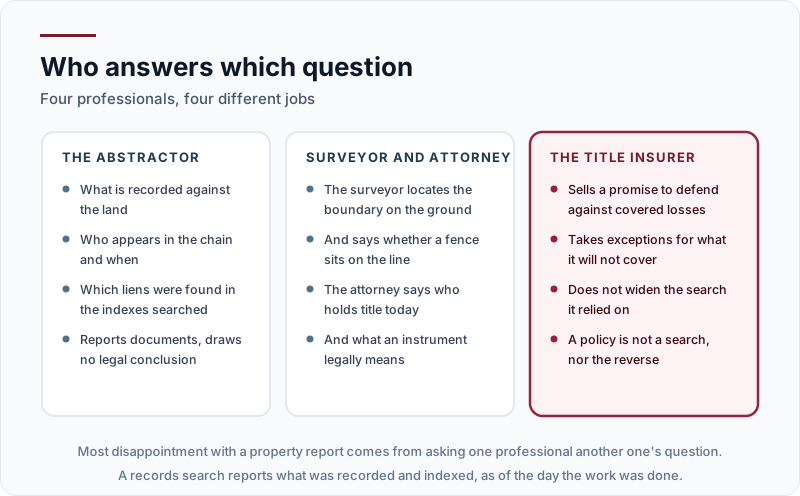
Four jobs, stated plainly
An abstractor establishes what is recorded against the land. Who appears in the chain and when, which instruments were found in the indexes searched, what liens and easements are on file. The output is documents and dates. An abstractor reports and does not conclude, which is the boundary described in what a title search is not.
A surveyor establishes where things are. The boundary on the ground, whether the fence sits on the line, whether the garage crosses it. This is measurement, and it is the one job that involves going to the property.
An attorney establishes what it all means. Who holds title today, whether a lien is still enforceable, what an ambiguous instrument does. Legal conclusions come from someone licensed in that state, not from the person who pulled the documents.
A title insurer does something different from all three. It sells a promise to defend against certain losses, takes written exceptions for what it will not cover, and prices the risk. It does not widen the search it relied on, and the policy is not a substitute for one.
The questions that go to the wrong desk
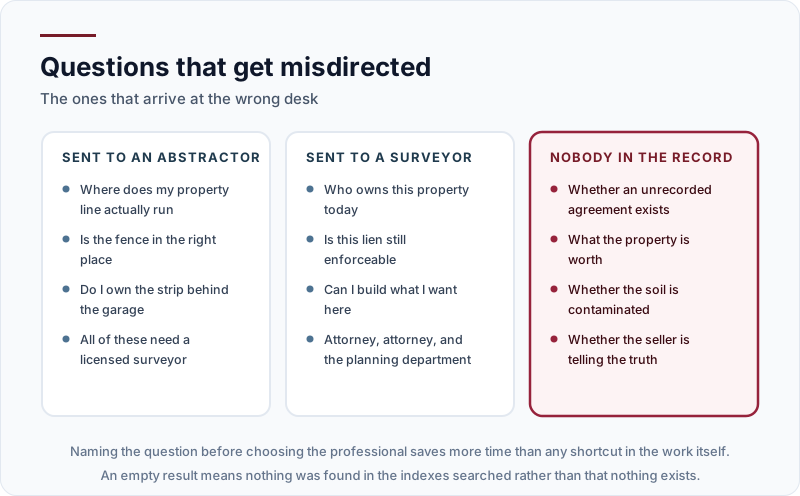
Abstractors are asked where the property line runs, whether the fence is in the right place, and whether the strip behind the garage belongs to the owner. All three need a licensed surveyor. A deed contains a description of the land, and turning that description into marks on the ground is a separate discipline.
Surveyors are asked who owns the property today, whether a lien is still good, and whether something can be built. The first two belong to an attorney and the third to the planning department.
And a set of questions belongs to nobody holding records at all. Whether an unrecorded side agreement exists. What the property is worth. Whether the soil is contaminated. Whether the seller is being straight with you. A clean report is not evidence about any of them, and treating silence as an answer is how people end up disappointed in work that was done correctly.
The order matters
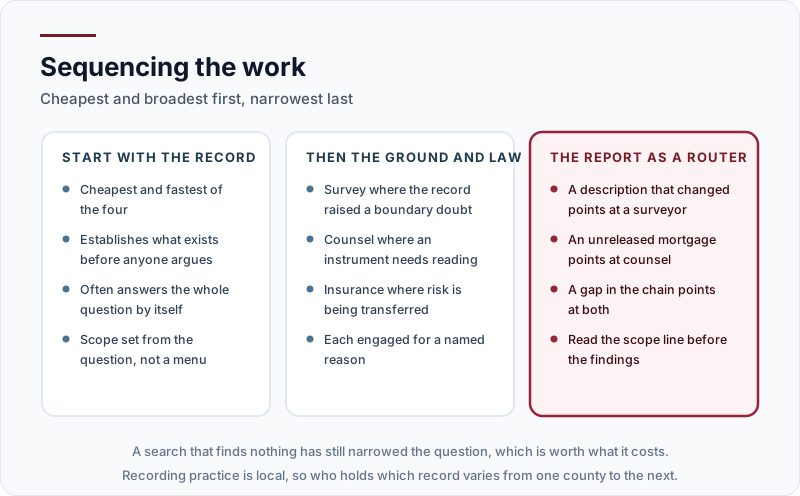
Start with the record. It is the cheapest and fastest of the four, it establishes what exists before anyone begins arguing, and on a great many transactions it answers the whole question by itself. Scope it from what you are trying to establish rather than from a price list, which is the subject of which title search do you need.
Then engage the others for named reasons. A survey where the record raised a doubt about the boundary. Counsel where an instrument needs interpreting or a defect needs curing. Insurance where risk is being transferred rather than investigated. Engaging all four reflexively on every transaction wastes money, and engaging none of them until something goes wrong costs considerably more.
A good report functions as a router. A legal description that changed between two deeds points at a surveyor. An unreleased mortgage points at counsel. A gap in the chain points at both, and a description that never matched the neighbors points back at how land is identified in the record. Read the scope line before the findings, because the scope is what tells you which of those signals the report was even in a position to send.
The takeaway
Name the question before choosing who to ask, and the rest sequences itself. Records first because it is cheap and broad, then the ground, then the law, then the insurance if risk is being moved rather than understood. A search that finds nothing has still narrowed the question, and it reports what was found in the indexes searched rather than everything that exists. Find the property that runs your search, or tell us what you are trying to establish and we will point you at the right one before anything is ordered.