

· AFX Research, LLC
Why Two Searches of the Same Property Can Disagree Legitimately
Different term, different names, different offices. Most disagreements between two title reports are scope differences rather than errors, and the scope line is how you tell.
Table of Contents
Two title reports land on the same desk, both describing the same parcel, and they do not say the same thing. One shows an easement the other does not mention. The reasonable first thought is that somebody made a mistake, and usually nobody did. They answered different questions, and the difference is legible if you read the right part of each document first. It follows from what a title search is not, which is a single fixed picture of a property.
Three legitimate reasons they differ
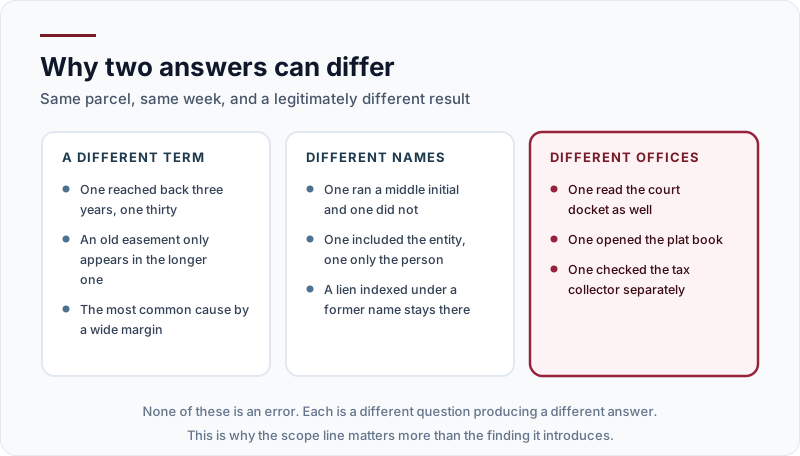
A different term. One search reached back three years and the other thirty. An easement granted in 1971 appears only in the longer one, and neither report is wrong about it. This is the most common cause by a wide margin, and it is covered in how far back a search should go.
Different names. One run included a middle initial and the other did not, or one included the entity that holds title while the other searched only the individual. A lien indexed under a former name stays indexed under that name, and finding it depends on somebody supplying it.
Different offices. One searcher read the court docket as well as the recorder, opened the plat book, or checked the tax collector separately. Those are three different sources, and a search that includes them returns more than one that does not.
There is a fourth reason that catches people out because it sounds like a technicality. The two searches were run on different dates. Anything recorded in between appears in the later one and could not have appeared in the earlier, and on a property in the middle of a transaction that gap is exactly where new filings land. A report is accurate as of a day, not indefinitely.
When it is a real problem
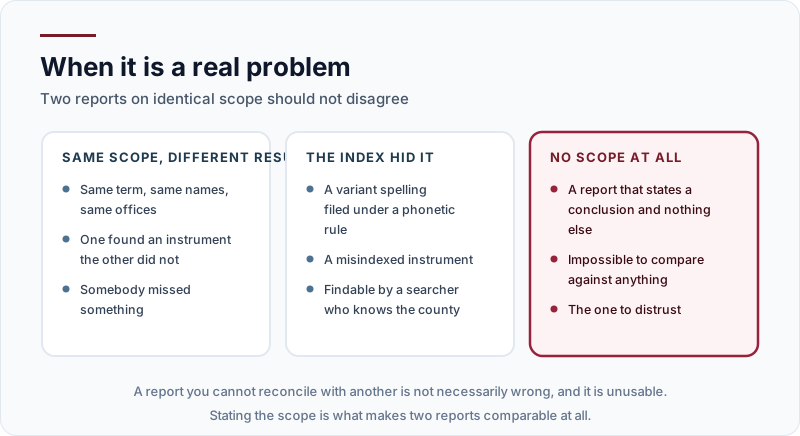
Sometimes it genuinely is an error. If both reports state the same term, the same names, and the same offices, and one found an instrument the other missed, somebody missed something.
Occasionally the index hid it. A variant spelling filed under a phonetic rule, or an instrument misindexed when it was recorded, is findable by a searcher who knows that county’s habits and invisible to one who does not.
Misindexing is worth taking seriously rather than treating as a rare curiosity. A clerk transposing two digits of a book number, or filing a deed under a misspelled grantee, produces an instrument that legally exists and practically cannot be found by anyone searching the obvious way.
The report to distrust is the one with no scope at all. A document that states a conclusion and nothing about what it read cannot be compared with anything, cannot be reconciled, and cannot be relied on when the two disagree. That is not necessarily a wrong report. It is an unusable one.
Reconciling them
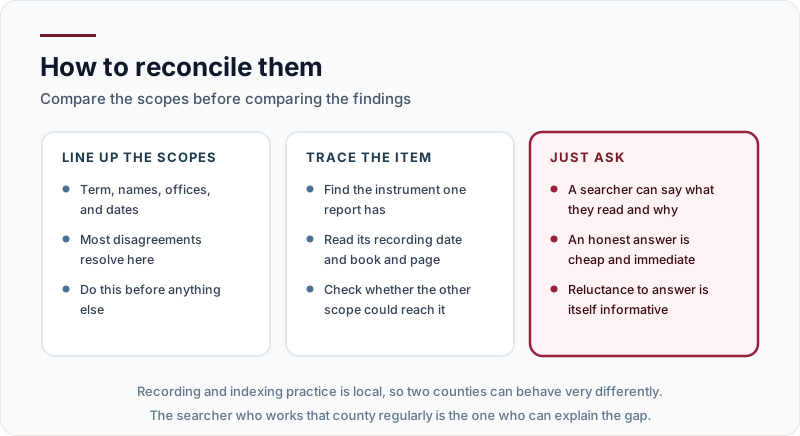
Line up the scopes before you look at the findings. Term, names, offices, and the dates each search was performed. Most disagreements resolve at that step and go no further.
Where they do not, trace the specific item. Find the instrument one report has, read its recording date and its book and page, and ask whether the other search’s scope could have reached it. Frequently the answer is obviously no.
Then just ask. A searcher can say what they read and why, and an honest answer costs nothing and arrives quickly. Reluctance to give one is itself informative. Recording and indexing practice is local, as covered in why recording practice is local, so the person who works that county regularly is the one who can explain the gap.
The takeaway
Two searches disagreeing is usually two questions rather than one error, and the scope line is what tells them apart. Compare scopes first, trace the specific instrument second, and ask the searcher third. And treat a report with no stated scope as the one that cannot be checked. Find the property that runs your search, or tell us what you are trying to establish and we will point you at the right one before anything is ordered.